
Hunting and wildlife diseases – game with game
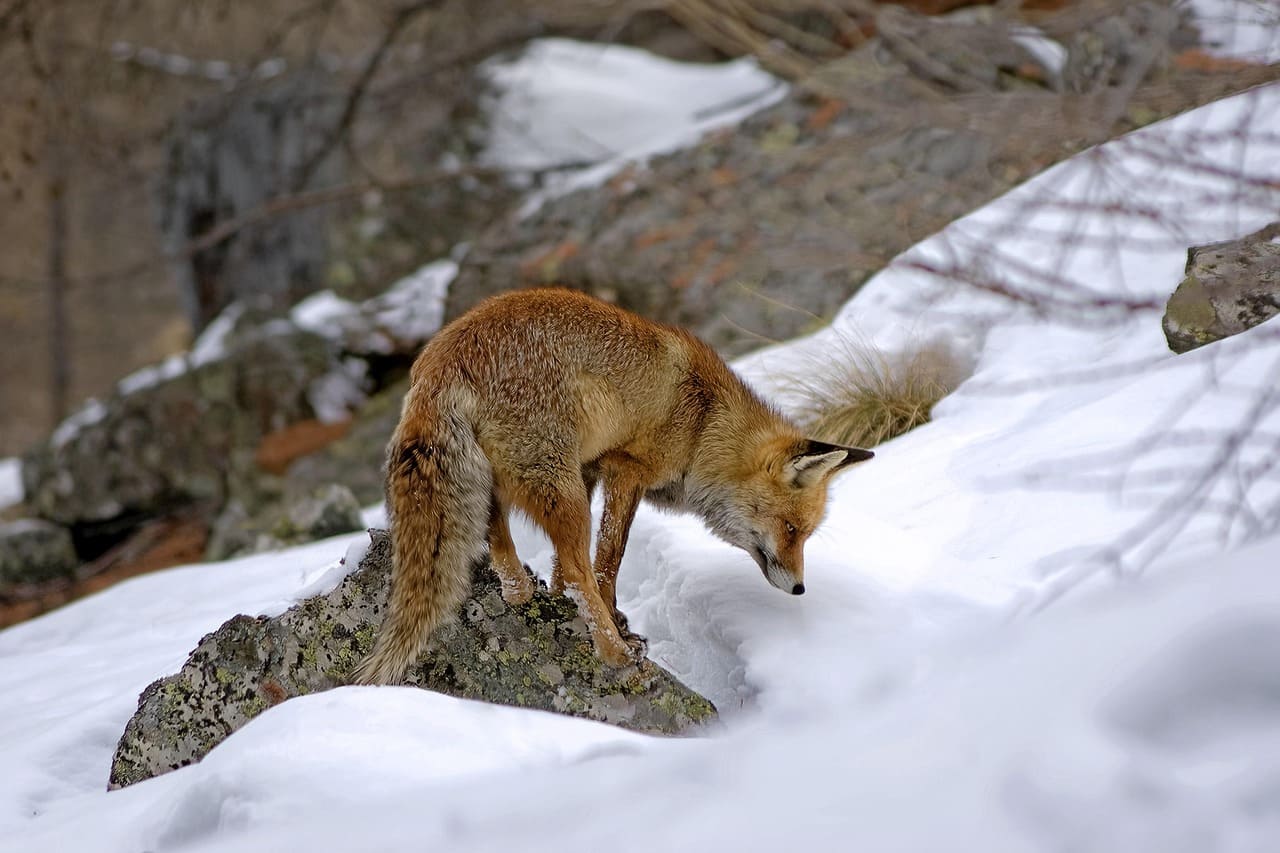
Hobby hunters have been claiming for decades that hunting foxes and other predators protects the population from diseases such as rabies, fox tapeworm, mange and Lyme disease. Science says the opposite: more intensive hunting destabilizes population structures, increases migratory movements and spreads diseases faster, not slower. What hunting associations sell as health management is an empirically refuted narrative that primarily serves to legitimize a leisure activity.
What is legally piquant is that according to Art. 26 of the Animal Welfare Act, there must be a “reasonable reason” for killing an animal. There is neither a legal shooting plan nor a scientifically recognised need for regulation for fox hunting. For more than 30 years, there have been at least 18 wildlife biology studies that prove that fox hunting does not regulate and is not suitable for disease control. On the contrary.
What to expect here
- Fox tapeworm: The most famous hunter’s Latin. As the Nancy study shows, intensified fox hunting increases the infestation rate from 40 to 55 percent instead of reducing it.
- Lyme disease: Fewer foxes, more ticks. Why hunting foxes causes mouse populations to explode and increases the risk of Lyme disease.
- Rabies: How the argument imploded. Why vaccination baits defeated rabies, not shootings, and how the hunting lobby simply replaced the legitimacy argument.
- Hunting pressure promotes diseases: The biological mechanism. What stress hormones, immunosuppression and destroyed social structures have to do with the spread of disease.
- Mange and distemper: counterproductive interventions. Why hobby hunting undermines the natural development of resistance and actively produces disease outbreaks.
- Jagdformen, die Leid erzeugen und Krankheiten fördern. Warum Baujagd, Treibjagd, Fallenjagd und Passjagd strukturell krankheitsfördernd wirken.
- Hantavirus, Leptospirose, Botulismus: Was wirklich schützt. Warum der Fuchs als Gesundheitspolizist kein Bild ist, sondern ein biologischer Mechanismus.
- Argumentarium. Antworten auf die häufigsten Behauptungen der Jagdlobby zur Seuchenbekämpfung.
- Quicklinks. Alle relevanten Beiträge, Studien und Dossiers.
Fuchsbandwurm: Das bekannteste Jägerlatein
Weniger Füchse, weniger Fuchsbandwurm, weniger Infektionsrisiko für den Menschen: Das klingt auf den ersten Blick plausibel. Auf den zweiten Blick ist es schlicht falsch. In einer Studie aus der Region Nancy wurde über vier Jahre lang wissenschaftlich untersucht, ob intensivierte Fuchsjagd die Verbreitung von Echinococcus multilocularis eindämmt. Das Ergebnis: 1700 Arbeitsstunden, 15’000 Kilometer nächtliche Autofahrten, 776 erschossene Füchse, eine Erhöhung des Jagddrucks um 35 Prozent, und trotzdem wurde die Fuchspopulation nicht reduziert.
Noch gravierender: Die Befallsrate mit dem Fuchsbandwurm stieg im intensiv bejagten Gebiet von 40 auf 55 Prozent, während sie im Vergleichsgebiet ohne intensivierte Jagd konstant blieb. Die Studie trägt den programmatischen Titel «Echinococcus multilocularis management by fox culling: An inappropriate paradigm». Was die Jagdverbände als Gesundheitsschutzmassnahme verkaufen, ist laut aktueller Wissenschaft nicht nur nutzlos, sondern kontraproduktiv. Die Alternative ist evidenzbasiert: Entwurmungsköder, die die Befallsrate von Füchsen auf nahezu null Prozent senken können, ohne ein einziges Tier zu töten.
Mehr dazu: Hobby-Jäger verbreiten Krankheiten und Fuchsjagd ohne Fakten
Borreliose: Weniger Füchse, mehr Zecken
Eine weitere aktuelle Studie zeigt, dass die Bejagung von Füchsen die Ansteckungsgefahr mit Lyme-Borreliose durch Zecken erhöht. Der Mechanismus ist biologisch nachvollziehbar: Füchse sind wichtige Mäusejäger. Ein Fuchs frisst rund 4’000 Mäuse pro Jahr. Wo Füchse fehlen oder dezimiert werden, explodieren Mäusepopulationen . Mäuse sind aber die Hauptwirte für Zecken: An einer Maus können sich Dutzende von Zeckenlarven und Nymphen gleichzeitig infizieren und Krankheitserreger direkt austauschen.
Wer Füchse bejagt, bejagt damit indirekt das eigene Immunsystem: mehr Mäuse bedeuten mehr Zecken, mehr Zecken bedeuten mehr Borreliose, mehr FSME, mehr Hantavirus. Die Kantone, die am meisten Füchse abschiesslassen, haben statistisch am meisten Probleme mit wildtierbedingten Krankheiten . Dieser Zusammenhang wird in der offiziellen Kommunikation der Jagdbehörden nicht erwähnt. Er stört das Narrativ.
Mehr dazu: Studien über die Auswirkung der Jagd auf Wildtiere und Jagd und Biodiversität: Schützt Hobby-Jagd wirklich die Natur?
Tollwut: Wie das Argument implodierte
Die Tollwut ist das historisch wichtigste Argument für die Fuchsjagd. Sie war es, die die massenhafte Bejagung des Fuchses in der Nachkriegszeit legitimierte. Das Problem: Die Tollwut wurde nicht durch Abschüsse besiegt, sondern durch Impfköder. Die schweizerische Tollwutzentrale folgerte bereits, dass eine jägerische Reduktion von Fuchspopulationen «offensichtlich nicht möglich und die Jagd zur Tollwutbekämpfung sogar kontraproduktiv sei». Seit 1998 gilt die terrestrische Tollwut in der Schweiz als ausgerottet, nicht dank der Jäger, sondern trotz ihrer Fuchsjagd.
Psychologisch interessant ist, was danach geschah: Das Argument «Tollwutbekämpfung» verschwand, aber die Fuchsjagd blieb. Man wechselte schlicht das Legitimationsargument, zuerst Tollwut, dann Fuchsbandwurm, dann Räude, dann Borreliose. Das Narrativ passt sich den wissenschaftlichen Widerlegungen an, die Jagdpraxis nicht. So funktioniert ein System, das auf Fortsetzung ausgelegt ist und nicht auf Wahrheit.
Mehr dazu: Niederjagd und Wildkrankheiten und Jagdmythen: 12 Behauptungen, die du kritisch prüfen solltest
Jagddruck fördert Krankheiten: Der biologische Mechanismus
Jagd erhöht Krankheiten nicht nur indirekt über Mäusepopulationen, sondern auch direkt über Stresshormone. Man weiss von anderen Arten, eingeschlossen Menschen, Hunden und anderen Tieren, dass bei starker Bejagung ein chronisch hohes Level von Stresshormonen zu Immunsuppression führt: Die Tiere sind anfälliger für Krankheiten und weniger gewappnet für die alltäglichen Herausforderungen des Lebens.
In addition, there is the disturbance of the social structure: In undisturbed fox packs, only the highest-ranking female reproduces. If the community breaks up due to hunting, almost every vixen is fertilized, the litter size increases, and a team of researchers found elevated progesterone levels as an indicator of an unusually high proportion of reproducing females. The result: more young animals, more migratory movements, more spread of disease. Exactly the opposite of what hunting associations claim.
More: Hobby hunting promotes diseases and hunting and animal welfare: What practice does with wild animals
Mange and distemper: counterproductive interventions
The mange flares up locally and extinguishes on its own. Especially where it has become particularly widespread, foxes are developing increasing resistance to new infections. Hunting nullifies this natural selection advantage: a hobby hunter does not see a fox’s mange resistance.
Intensive hunting stress can also act as a trigger for mange: mites are latent on every animal’s skin, but they only break out when the immune system is weakened by stress. Anyone who puts foxes under constant stress with passages, driven hunts and trap hunts actively produces the disease outbreaks, which he then uses as legitimation for further hunting. This is not wildlife management, this is a self-generating problem system.
Read more: Why hobby hunting fails as population control and why Geneva and the hunting ban
Forms of hunting that cause suffering and promote diseases
Not all forms of hunting are the same. Some structurally increase disease risks:
Burrow hunting: Sharpened dogs are sent into fox dens to drive foxes out. There are underground fights in which dog and fox bite into each other. Injuries increase the risk of infection in both animals. According to a survey by Swiss Animal Protection, 70 percent of the population would be in favor of a ban on burrow hunting.
Driven hunt: In hunted wild animals, health-damaging stress hormones are released in fearful situations, which manifest themselves in meat and are consumed by humans in game. Shot is used, which contaminates the forest floor with lead and carcasses transfer the lead into the food chain as pieces that have not been found.
Trap hunting: Animals wait in the trap for hours or days, under extreme stress, which has been shown to weaken the immune system and increase susceptibility to disease.
Pass hunting: Foxes and other predators are lured with food and shot at bait sites. The targeted killing of Leitbache and males destroys social structures and increases migratory movements, which spreads diseases.
More on this: Burrow hunting and trap hunting
Hantavirus, leptospirosis, botulism: What really protects
A fox eats around 4,000 mice per year. Mice give birth to 10 to 15 young every 30 days and are sexually mature after 6 to 8 weeks. The connection is mathematically clear: where foxes are missing, mouse populations explode and with them the risks of hantavirus, leptospirosis and Lyme disease.
Hantavirus is transmitted via mouse droppings and causes flu-like illnesses up to kidney failure. Leptospirosis survives in puddles for weeks and infects dogs and humans. Botulism originates in carcasses that accumulate in silage and hay; In a leaflet to farmers, it was recommended to mow fields the evening before so that foxes eat the dead animals as scavengers, which greatly reduces the risk of botulism in the silage. The fox as a health policeman is not a metaphor, it is a biological mechanism.
More on this: Deterrence of wild animals and arguments against hobby hunting and for gamekeepers
What would have to change
- Setting up fox hunting: At least 18 wildlife biology studies over three decades prove that fox hunting does not regulate populations and promotes diseases instead of containing them. Switzerland should follow Luxembourg’s example and suspend fox hunting. Sample proposal: Sample texts for initiatives critical of hunting
- Use deworming bait instead of kills: The Nancy study and further research show that oral deworming baits can reduce the fox tapeworm infestation rate to almost zero without killing an animal. This method must be financed and implemented nationwide.
- Prohibit burrow hunting and trap hunting: Both forms of hunting cause extreme animal suffering and promote disease outbreaks through stress and immunosuppression. 70 percent of the population are in favor of a ban on burrow hunting.
- Decoupling wildlife disease monitoring from hobby hunting: The monitoring of wildlife diseases must not be in the hands of those who have an interest in continuing hunting. Independent veterinary authorities must take over data sovereignty.
- Professional wildlife management according to the Geneva model: State wildlife wardens with veterinary supervision can manage wildlife diseases on an evidence-based basis without destabilizing the population structures that enable natural disease resistance. Model initiative: Hunting ban based on the Geneva model
Arguments
“Without fox hunting, the fox tapeworm would become an epidemic.” The Nancy study shows the opposite: intensified fox hunting increased the infestation rate from 40 to 55 percent, while it remained constant in the comparison area without hunting intensification. The authors describe fox hunting for disease control as an “inappropriate paradigm”. What actually works are deworming baits, which reduce the infestation rate to almost zero without killing an animal. The fox tapeworm is the argument, not the solution.
“Fewer foxes means fewer diseases for humans.” Fewer foxes means more mice, more mice means more ticks, more ticks means more Lyme disease, more TBE, more hantavirus. A fox eats 4,000 mice per year. Where foxes are absent, the populations of the main hosts for ticks and zoonotic pathogens explode. This is not an activist argument, this is food chain biology.
“The fight against rabies proves that fox hunting works.” Rabies was not defeated by shooting, but by vaccination bait. The Swiss rabies centre itself stated that population reduction through hunting was “obviously not possible” and “even counterproductive”. Terrestrial rabies has been eradicated in Switzerland since 1998, not thanks to hobby hunting, but in spite of it. The rabies argument is a historical admission, not proof.
“Mangy foxes have to be shot to stop the spread.” Mange flares up locally and extinguishes on its own. Where it spreads, foxes develop increasing resistance. Hobby hunting nullifies this natural selection advantage, because a hobby hunter does not show the mange resistance of a fox. Hunting stress also weakens the immune system and activates latent mites, so hobby hunting actively produces the disease outbreaks, which it then uses as legitimation.
“Hunting is disease prevention.” Hunting is the opposite of epidemic prevention. Hunting destabilizes social structures, increases migratory movements, suppresses immune systems through chronic stress and destroys natural regulatory mechanisms. What epidemic prevention would be: stable carnivore populations, intact social structures, deworming baits, independent veterinary monitoring. All measures that do not require hobby hunting.
Quick Links
Posts on Wild beim Wild:
- Low hunting and game diseases
- Hobby hunters spread diseases
- Hobby hunting promotes diseases
- Studies on the impact of hunting on wildlife
- Why hobby hunting fails as a means of population control
- Geneva hunting ban
- Deterrence of wild animals
Related dossiers:
- Hunting and wildlife diseases
- Night hunting and high-tech hunting: How thermal imaging cameras, night sights, drones and digital lures debunk the fairy tale of fair hunting
- Hunting dogs: use, suffering and animal welfare
- Lead ammunition and environmental toxins from hobby hunting: How a toxic legacy pollutes birds of prey, soil and people
- High hunting in Switzerland: traditional ritual, violence zone and stress test for wild animals
- African Swine Fever: How an Animal Disease Becomes a Justification for Hobby Hunting
- Hunting accidents in Switzerland
- Hunting and animal welfare: What practice does to wild animals
- Hunting and weapons
- Driven hunting in Switzerland
- Hunting from a hide: waiting, technique and risks
- Burrow hunting
- Trap Hunting
- Pass Hunt
- Special hunting in Graubünden
Our claim
The claim that hobby hunting protects against wildlife diseases is not only false, it has been empirically refuted. At least 18 wildlife biology studies over more than three decades consistently prove the same thing: hunting destabilizes population structures, increases migratory movements, suppresses natural immune resistance, and spreads diseases more quickly. If you shoot foxes, you produce more mice, more ticks, more Lyme disease, more hantavirus. This is not an activist argument, this is biology.
What actually protects is the opposite: stable predator populations, intact social structures, deworming bait instead of shooting, professional wildlife management instead of armed leisure activities. For 50 years, the canton of Geneva has shown that this model is cheaper, more animal welfare-friendly and epidemiologically more effective than any militia hunt. This dossier is continuously updated as new studies, figures or political developments require it.
More on the topic of hobby hunting: In our dossier on hunting, we bundle fact checks, analyses and background reports.