by Jim Robertson, President of C.A.S.H.
Unless you’ve been living under a rock (which isn’t a bad idea since it’s about the coolest place to be in the West during these days of heat domes and prolonged drought), you have undoubtedly heard of the growing menace of megafires afflicting the land. As I write this, there are hundreds of out-of-control wildfires surrounding the region, often hyped as a “sportsman’s paradise.”
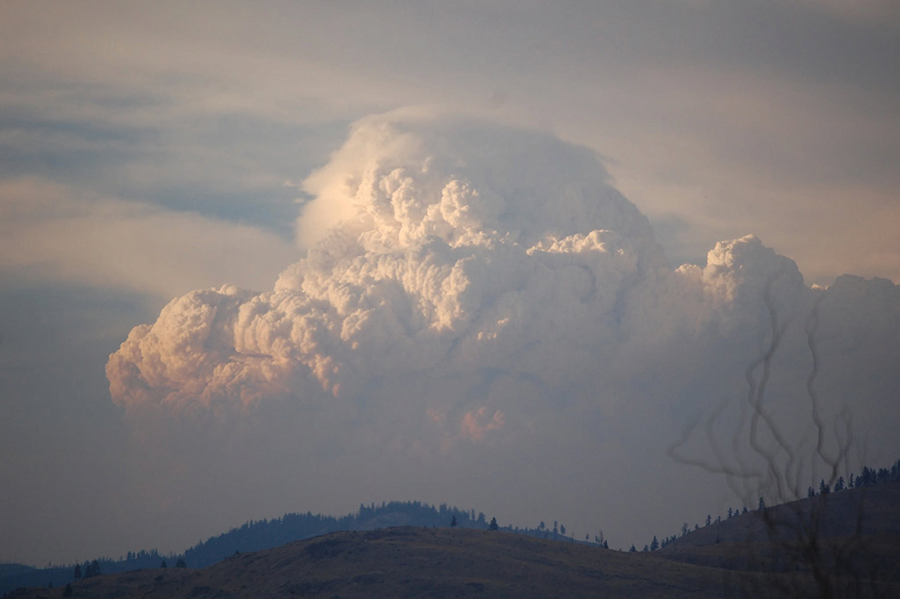
Just yesterday, a brand-new fire mysteriously started next to a cattle ranch up the creek drainage from here. At noon it was just 35 acres and by 5:00 P.M. (thanks to the 95-degree heat and near-record dryness), had grown to 400 acres and counting.
Only for the fact that there are so many high-end homes threatened in the area is there any hope that this one won’t explode into one of those 100,000+ acre monster fires that put out so much unhealthy smoke you can’t see your hand in front of your face.
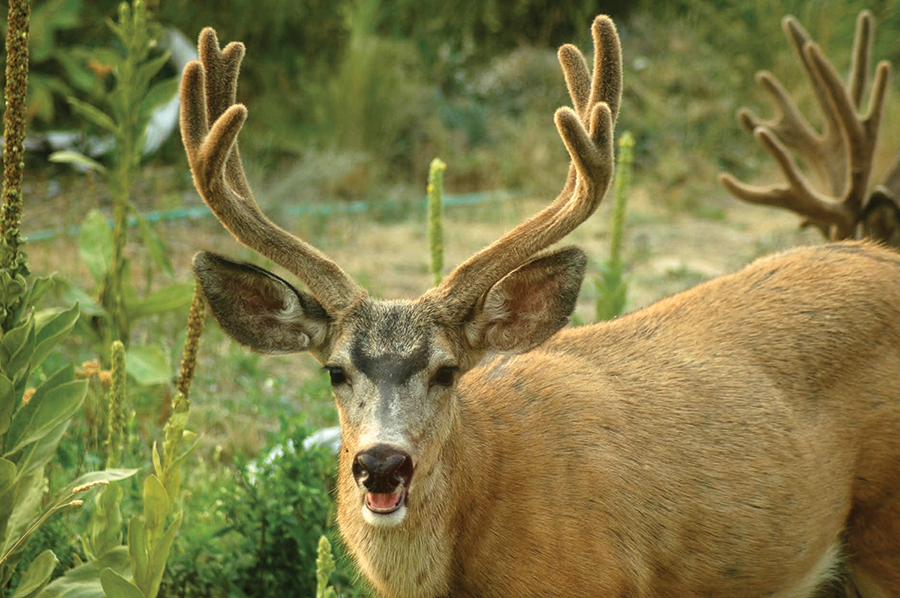
Much can be found on film or in print throughout the news about the converted passenger jets and twin-rotor helicopters dropping water and retardant on these infernos when they are in the proximity of trophy show-homes, but little is said or reported about the homes, habitats and lives lost of the wild species who struggle to live there too. Yet, their plight is no less dramatic.
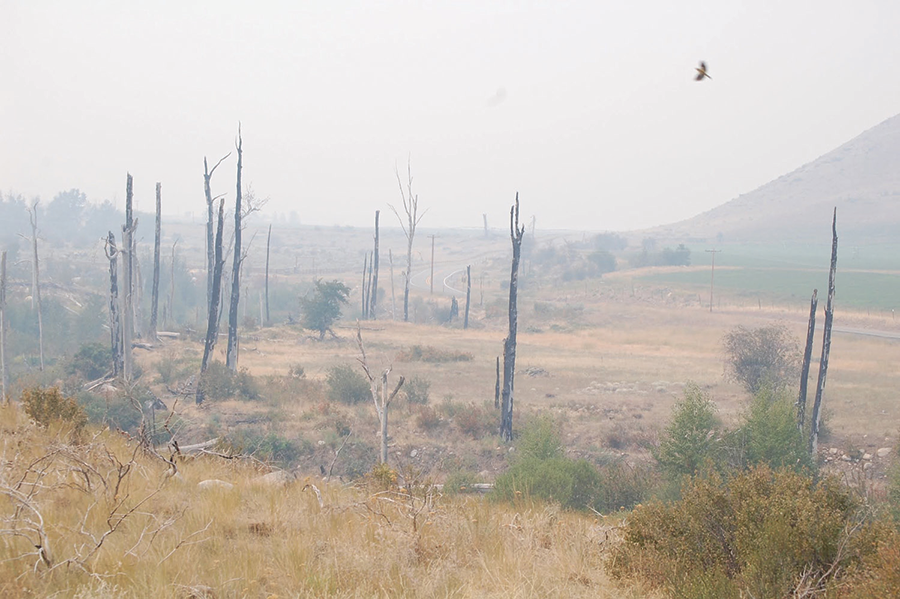
The sheer numbers of non-human animals killed in wildfires is not something the anthropocentric powers that be like to calculate and it’s not high on the list for the mainstream media to cover. Wildfire “managers” strive to drive wildfires back into national forest wilderness areas (regardless of the number of animals who’ll spend their last hours trying to outrun the choking smoke and flames), rather than risk a valuable house belonging to a well-heeled taxpayer.
And yet, as the late biologist, geologist, naturalist and steadfast abolitionist, Carles Darwin, put it, back in the mid-Ninetieth century, “There is no fundamental difference between man and animals in their ability to feel pleasure and pain, happiness, and misery.”
Those deer lying in smoke-filled clearings, panting and gasping to draw a breath, might appear deceptively calm at first glance. The smoke tends to have a tranquilizing effect on individuals who are unaware of its source. But once flames are visible, shaking them out of their torpor, deer, elk, bears and others are forced to flee, often in blind panic.
It was just these kinds of distracted deer that hunters in Utah must have hoped to be able to “harvest” when they defied an “Area Closed for wildfire suppression” sign and ventured into the closure this August, without so much as a Pulaski, a shovel or radio between them. I hate to be the one to tell them that their rifles wouldn’t have done much good against a wind-driven wall of flame, but they might have earned themselves an honorable mention in the Darwin Awards, or at least a page on the C.A.S.H. website, under 2026 Hunting Accidents.
Firefighters at the Utah blaze had to cease their efforts and fly the hunters by helicopter out of the area (for the hunter’s safety and for the safety of other firefighters). Not only is trying to stop a wildfire in a war zone a risky endeavor, it’s also been well documented that bullets ricocheting off rocks have ignited far more than their share of new wildfires.
It was a frightened hunter’s out of control signal fire that started California’s largest wildfire, which burned 273,246 acres of forest, killed 15 people and destroyed 2,232 houses. And again, no one was even trying to keep track of the number of animals that were killed in the conflagration, but it’s safe to say that at least one hunter has filled his kill-quota for many, many lifetimes and then some.
A few more details about this hunter-caused mega-fire will enlighten but are sure to lower Courier reader’s opinion of hunters in general (if that’s even humanly possible): It turns out the hunter in question chose to start the deadly fire after being lost out there in the scary woods for less than an hour. It was only three in the afternoon, not even close to dark yet, with strong wind whipping through the canyon and the surrounding brush tinder-dry and ready to burn, yet he had no way of extinguishing or containing a fire once he’d started it.
Like the Utah hunters this year, who defied the “Area Closed for wildfire suppression,” this hunter felt similarly entitled to defy the “No Fires” policy California had in place at that time of year. (Even cigarette smoking was banned, unless within one’s own vehicle.) It wasn’t cold out and although he was within view of a road, he was a lost hunter, and he wanted to be rescued and get to go home.
I’m sure Smokey the Bear doesn’t appreciate having the risk of forest fires added to the seasonal, mortal threat from Elmers out in force trying to “harvest” him or any other member of his species to fill their empty hearts or overstuffed bellies.
As much as they’d like to keep it a well-guarded secret, the harsh reality that most hunters are self-centered is proven out time and again by the fact that hunting is clearly a self-centered “sport.” Like pampered house cats killing mice or birds purely for pleasure, hunters these days kill deer, elk, moose, coyotes, wolves, cougars, bobcats and “game” birds, etc., as a pastime, a hobby—or simply for the fun of it. Unlike the victims they target, hunters can scurry back to their fully stocked, well protected homes whenever a blaze starts (all too often as the result of their own actions).
Roaring hunter campfires, often located directly under thick canopies of evergreen tree branches, left to continue to burn on cold mornings in case someone in the hunting party needs to come back later to warm up (because they forgot their Cabella’s long johns that weekend); excessive use of four-wheelers and other all-terrain vehicles that may or may not come equipped with spark arresters; not to mention an ingrained rejection of all things scientific—like climate change or general ecology—can make an autumn hunting trip a recipe for disaster.
Hunters don’t seem to mind climbing over barbed wire fences found throughout the national forest. To them, it seems to give off a comforting feeling that humans are still in control of the planet. Meanwhile, deer, elk and the like, particularly their fawns or calves, often die in fast-moving fires, but the adults of those species can at least jump the pervasive, lethal fencelines that would otherwise ensnare them (when they can see the wretched hazards through the thick, blanketing smoke, that is).
But much of the West’s “free range” cows are ultimately held captive behind “cattle guards” cut into dirt roads and barbed wire fences found throughout the so-called “open range,” where they are numbered, ear-tagged and left to fend for themselves. Cows and other species considered “livestock” can’t jump the fences and far too many each year end up burned to death like in some nightmarish scenario from World War I or II or some other mindless wartime era.
But you might ask, ‘Aren’t most wildfires started by lightning and isn’t that just a part of nature?’ Well, not so much anymore. According to National Geographic, human-caused wildfires make up 85% to 90% of all fires in the world today. While it’s true that the lightning-caused fires have been around since long before human beings first walked, swam or crawled out onto the land, the lightning-caused fires seen today are exacerbated by human-caused global warming. Heat makes the air hold moisture, which fuels more lightning than what we used to think of as normal. Higher surface heat also causes strong updrafts in the resultant unstable clouds. Updrafts cause ice particles to crash together, creating the friction which builds up the electrical charges that create lightning.
Worsening droughts from low snowpacks and lack of rain dry out trees, plants and shrubs that can fuel wildfires. Also, Climate change lowers nighttime humidity, further drying out vegetation, causing wildfires to burn hotter and faster, not to mention longer. And when these conditions are combined with the increasing winds now found even in places that rarely ever saw a windy summer day in the past, today’s fires can become not only larger, but also more dangerous and deadly than they were a decade or two ago.
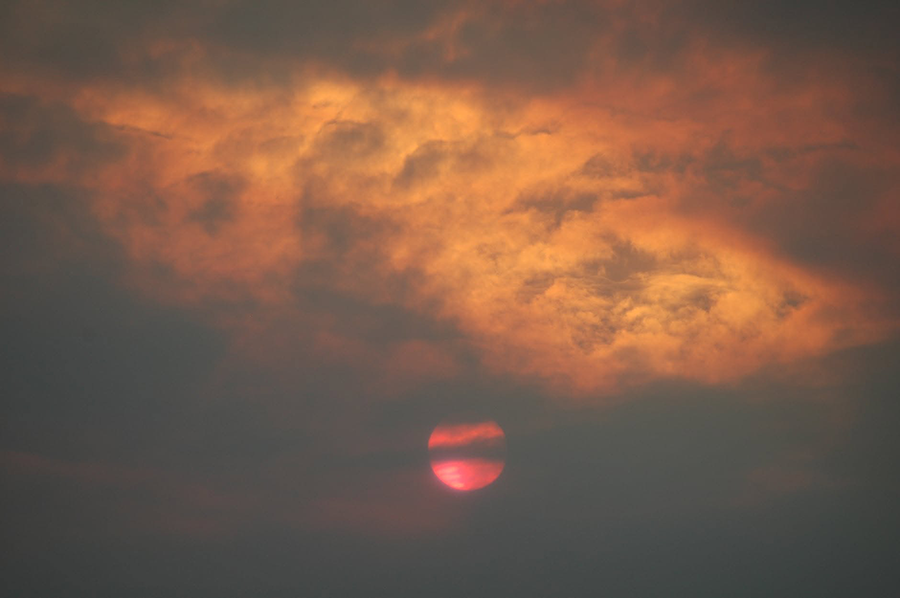
These days, there are times when it seems Mother Nature hates the human species and is out to kill us off. But, although she’d be well within her rights considering how thoughtlessly she’s been abused throughout our species’ long, reckless history, I can assure you She has nothing more than self-preservation in mind.
I refer to Mother Nature (or Mother Earth) as “She” in part because the label “He” has already been so widely used by believers in a Great Creator, whom, if he in fact existed and brought forth all life in its present state, would have every reason to want, with equal fervor, to do away with our species (whom I can imagine He regrets creating in His own image).
No, Mother Nature’s motive for her recent destructive behavior may simply be to begin to clean the slate (as has happened numerous times in the past) to re-stimulate the evolutionary process that will eventually lead to even more diversity of life than existed before this increasingly one-sided epoch, even as our species of homo dreams of colonizing new planets across the vast, lifeless void of space.
But, if a mother or father figure has anything to say about it, I’m sure he or she would tell us that before we can go out and play, we have to finish our homework and start trying to get along with our brothers and sisters (and not torment the dog and cat). Based on humans’ past record of wanton waste and destruction, I wouldn’t hold my breath…
Jim Robertson is the President of C.A.S.H. He’s the author of Exposing the Big Game: Living Targets of a Dying Sport. You can order Jim’s book on Amazon.