What would happen if apex predators vanished from the landscape?
May 13, 2026 | by Alan Clemons | TAGS(2)
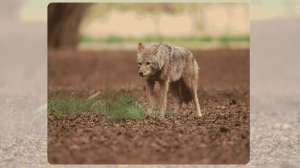

Fisticuffs haven’t been thrown, and fissures aren’t imminent, but the desire by many big-game hunters to see wolves and coyotes gone forever surely would spark debate. Each year during late spring, hunters who pursue elk, moose, mule deer and whitetails lament fawns and calves being snatched by wolves and coyotes. They see photos and videos on game cameras or maybe find a leg or swath of hair. Or nothing. Photos of a cow or doe with a calf or fawn offer hope. Later, a solo cow or doe creates consternation.
I experienced this on a property where I hunt — a travel corridor between two larger wooded tracts owned by others. It’s hit-or-miss for me, although after viewing a few years of activity on trail cameras, I’ve figured out some travel timing. Summer photos of whitetail does with spindly legged fawns were nice. The blurry nighttime image of a coyote clamped onto a limp, weeks-old fawn was not. This past January, a picked-clean skeleton in the pasture surprised me. It was the first I’d found there in eight years. The sternum and front legs and shoulders were gone. There appeared to be no shattered ribs from a bullet or broadhead. A few days later, the remaining bits of hide and muscle on the hind legs were gone.
Years ago, I probably would’ve said, “Damned coyotes, I wish they were gone!” and started planning how to hunt or maybe trap them. These days, not so much. I certainly enjoy hunting coyotes and always have. I’ve had some great times behind a rifle or shotgun in Texas, Oklahoma and across the Southeast.
One hunt in Oklahoma stands out. I was sitting in thick fog with J.J. Reich of Federal Premium, testing then-new .224 Valkyrie ammunition in an AR-15. A coyote answered our calls somewhere in that gray soup — likely well within range — but it was cautious enough to stay hidden in the fog. Another morning we woke to ice coating everything from an overnight “freezing fog,” something I’d never seen before.
On another hunt in Texas, a curious coyote slipped through the brush and tiptoed to within about 5 yards before I finally spotted it and let out a startled yelp. My buddies were already laughing as I shouldered the 12-gauge and sent a load through the mesquite.
Hunting is fun. Trapping is effective, educational and satisfying. Poof! All the coyotes and wolves are gone. Throw in foxes, too. Hunting and trapping worked! Big-game hunters are happy. Predator hunters and trappers are sad. Booooo. But now what happens in the fields and woods, in the mountains and swamps? What happens to populations of those big-game animals that fuel the hunting industry’s locomotive, and the small-game and varmint populations kept in check by the predators?
Do the deer, moose and elk overpopulate and die from disease or starvation? Hunters already don’t kill enough deer in some states, such as western Tennessee, where the daily limit is three does. In some places, big-game hunters still are excoriated for shooting does, thanks to peer or family pressure. As with any wildlife management and hunting issue, pros and cons exist. Coyotes and wolves are part of those pros and cons.

Cycles of Life
Years ago, while on a hunt with some diehard beagle-raisin’ bunny chasers, I asked what they looked for in a good hunting area. Habitat, with forage that rabbits prefer and need for raising offspring, obviously is a visible indicator. That’s true about a lot of animals, right?
One of the hunters said he looked for coyote scat. If he saw a lot of scat, and his beagles didn’t hit many tracks, he figured the rabbits were in a down cycle and coyotes were on the upswing. It made sense to me. Natural cycles, annual mortality, weather factors such as a drought or flooding, and human pressure all play roles. It’s the same for deer, elk, wolves, coyotes, birds and other species — predator and prey.
I’ve noticed that on the previously mentioned property where I found the deer skeleton. During the years when I see a lot of coyote activity on my game cameras, rabbits are virtually nonexistent. When I see more rabbits, for whatever reason the coyotes don’t seem to be around as much. Perhaps they got hit by cars, waylaid by disease or moved to another property with more available food. Like most animals, coyotes (and wolves) seek the best food sources and often “camp out” on them.
Eliminating all coyotes and wolves sounds like a dream scenario for big- and small-game hunters. Deer and elk and moose populations would soar. Rabbits would be everywhere. Upland birds, turkeys and waterfowl might even see a bump. And yet, the flip side is that there would be negative ecological issues. Diseases could, or likely would, be more rampant and spread more easily among these prey species.
Back in the 2000s, Alabama’s conservation department began holding archery hunts at the state’s largest public park, south of Birmingham. From the road into the park, the browse line probably was 6 feet high. You could easily see 40 or 50 yards into the woods. Everything was eaten, from browse on the ground to cedars and pines. The park was a haven, nothing bothered the deer — and they were starving. One doe brought to the check station was estimated to be 4 years old and weighed only 88 pounds. In the two decades since, the deer population has declined, and plant life has rebounded.
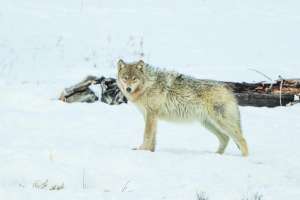
That’s a microcosm, similar to that of Yellowstone National Park and its wolf reintroduction a few decades ago. Before wolves were released in 1995, the park had issues with the overpopulation of certain animals and persistent damage to some plant species. One example is elk. Their numbers grew tremendously, and with no predators they spent time grazing on willow, aspen and cottonwood, among other plants.
Beavers had less food and wood to build dams. Beaver dams are critical for establishing new marshes and ponds beneficial for birds, fish and a variety of plant species. One beaver colony existed in 1995; today, the park has about 10. Why? Wolves keep elk on the move, meaning they cannot severely hammer one area of trees. That’s just one example. No wolves created an ecological ripple effect. Reintroduction still is a political fireball three decades later. Strictly looking at inclusion or exclusion, however, shows how every puzzle piece has its place.
In the Upper Midwest, the Great Lakes wolf battle is still raging. Ditto in Idaho, Montana and Wyoming, with wolves and grizzly bears. Proponents in both regions want them protected and restored to their “native range.” Opponents want state management, hunting and trapping seasons and fewer legal constraints. Hunters in Michigan’s Upper Peninsula, along with northern Wisconsin and Minnesota regions, have seen impacts of wolves on deer and moose. Landowners in both areas with livestock — especially in the Rockies and even California — continually worry about attacks and losses by bears and wolves. Add coyotes to the mix and it’s a continual churn.
Wolves have been demonized, and sometimes romanticized, for centuries. European artwork has shown vicious wolves and brave hunters. The Flemish artist Peter Paul Rubens created “Wolf and Fox Hunt” in 1616, currently at The Met museum in New York City. The bronze statue “Capitoline Wolf” depicts the mythical founders of Rome, Romulus and Remus, with the she-wolf who saved them from the River Tiber. Wolves were central in several popular fairy tales, including “The Three Little Pigs,” “Little Red Riding Hood” and “Peter and the Wolf.”
“There are good wolves and there are bad wolves,” Rick Roberti, a rancher and the president of the California Cattlemen’s Association, told The New York Times earlier this year. The story was about wolves returning in northern and central California, the latter home to ranchers and livestock farms. Wolves attacked and killed some livestock. State officials ultimately had to hunt and kill some of the wolves — another political fireball. Roberti said where wolves have attacked, and in areas where they have not but are present, has created whiplash feelings. “It’s hard for everybody,” he said.
Everything Has a Purpose
Coyotes have expanded their range to most of North America, becoming part of the routine for farmers, hunters, trappers and wildlife watchers. I have seen them on public trails five minutes from downtown in our city of more than 200,000 people. A pair in Central Park has been dubbed Romeo and Juliet, capturing the hearts of hardened New York City residents. They’re found throughout the United States, Canada and Mexico.
Yes, they eat whitetail fawns. Hunters hate that. Coyotes are omnivores, though, and will eat almost anything they can find that fills their belly or can be taken to their pups. This includes mice, rats, rabbits, voles, rodents, birds, soft mast and even garden vegetables or melons. They’re opportunistic, though. When fawns drop in spring, the defenseless young are too much to pass up. Sick or weak deer also are taken.
If we removed all coyotes and wolves, it would alter the balance of the ecosystem. The trapping industry would be financially crippled, too. The hunting industry would take a big hit. Consider the ammunition and rifles for example dedicated to hunting coyotes and other predators. Oh, and optics and all the calls, electronic and hand-held, as well as blinds and other accessories. Big and small companies would be affected.
The law of unintended consequences isn’t always apparent. Politicians often pass legislation, or refuse to, thinking, We can fix it later. Sometimes that’s not possible once the genie is out of the bottle. Even if we could say, “Poof! Gone!” and not have any more wolves or coyotes, it wouldn’t be for the best.
Everything has its place.
Poof! Coyotes and Wolves Are Gone. Now What? | Grand View Outdoors