
The wolf as an enemy image: fearmongering without foundation.

Wolf Switzerland dangerous? Facts and myths
 Email
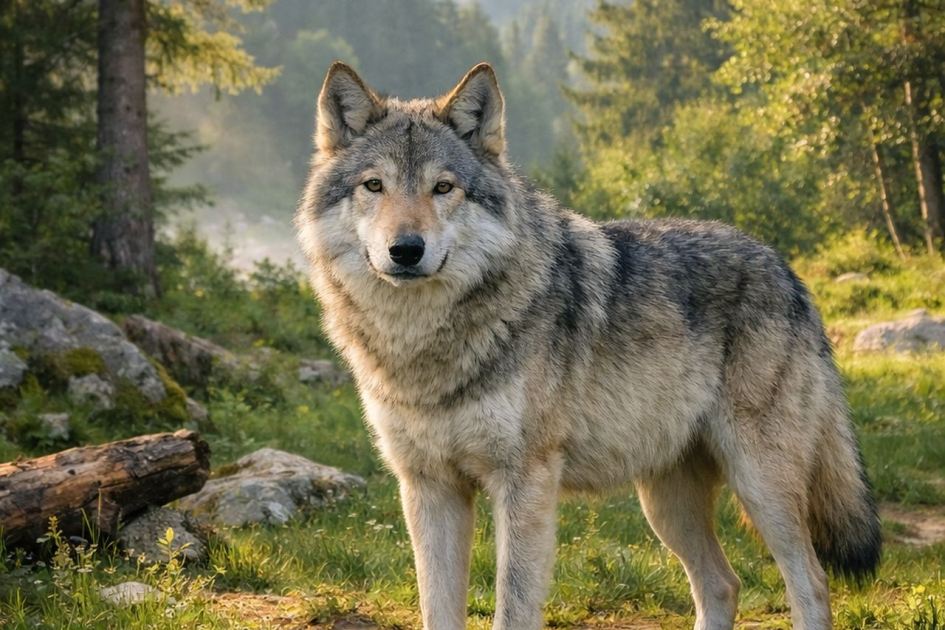
In the entire documented history of Switzerland, there is not a single confirmed fatal wolf attack on a human.
The portrayal of the wolf as a threat to the population is scientifically untenable – yet it is being politically instrumentalised to justify culls and undermine species protection.
What do the facts say about wolf attacks on humans?
Worldwide, documented attacks by healthy wild wolves on humans are extremely rare. In Europe, there are virtually no verified deaths from healthy wild wolves in modern history. In Switzerland, not a single confirmed case is on record in which a human was killed or seriously injured by a wolf. The Wolf in Switzerland dossier states: zero statistical attacks on humans.
This record stands despite the fact that wolves have been returning to Switzerland since the mid-1990s – initially through natural immigration from Italy and France, and now around 30 packs with an estimated 300 animals live in the country. Throughout all these years with a growing wolf population, not a single attack on a human has occurred.
How dangerous is the wolf compared to other animals?
A sober comparison shows: the wolf is statistically insignificant for humans. Cattle, dogs and wasps kill several people in Switzerland each year. Hunting accidents – caused by recreational hunters – killed at least 75 people between 2000 and 2019. These figures are documented in the JagdSchweiz brochure fact-check.
The wolf, by contrast, fundamentally avoids humans. Wolves are flight animals when it comes to people and typically behave defensively when they can avoid contact. Conflicts arise almost exclusively when wolves have been conditioned – that is, when they have been systematically fed or habituated to human proximity.
Why is the wolf still portrayed as a threat?
The fear narratives around the wolf have little to do with biological reality, but much to do with hunting politics. As the Hunting myths dossier shows, the hunting lobby systematically operates with threat scenarios to politically enforce regulatory measures – in other words, culls. The wolf as a “danger” is ideal for triggering emotional reactions in the population.
Political figures such as Christophe Darbellay (CVP Valais) – himself an active recreational hunter – have exploited wolf policy as a vehicle for self-promotion. The canton of Valais’s 2016 popular initiative “Wolf finished, cheerio!” was a political mobilisation campaign that Pro Natura called an “extermination initiative” – not a public safety measure.
What role do the media play in generating fear?
The media play a crucial role in how the wolf is perceived. As the Media and hunting issues dossier shows, wolf predation on livestock is routinely reported prominently, while scientific evidence for the ecological significance of the wolf barely gets space. Broadcasting formats that foreground the emotional concerns of alpine farmers shape the public image far more than sober statistics.
Often missing is context: in Switzerland, around 4,000 sheep still die each year from disease, falls and weather – often due to inadequate care. These deaths make no headlines. The 336 wolf kills in 2022 – the highest figure since 1998 – certainly do.
What about aggressive behaviour by wolves?
Problematic approach behaviour by wolves – that is, situations in which a wolf does not avoid a human – is very rare and almost always due to habituation. This means: the wolf has learned not to perceive humans as a threat. This occurs when wolves are consciously or unconsciously fed, or when they have grown up in intensively settled areas.
In such cases, targeted measures are appropriate – behavioural training, harassment, and in extreme cases removal of the individual animal. These measures differ fundamentally from blanket pack culls, which are scientifically counterproductive: more than 200 scientists signed an open letter criticizing the fact that wolf removals destroy pack social structure and thereby lead to more conflict, higher reproduction and more unstable behaviour.
What do scientists say?
The scientific consensus is unequivocal: healthy wild wolves do not attack humans. The Wolf in Switzerland dossier documents how over 200 scientists signed an open letter criticising Swiss wolf policy. They warn that endangered species such as the wolf do not belong in hunting law and that culls exacerbate conflicts rather than solving them.
Wolf policy should be based on scientific findings – not on the emotional pressure of a lobby that derives political capital from the culling of predators.
How should people behave if they encounter a wolf?
Encounters with wolves in nature are extraordinarily rare. Wolves are shy and typically avoid humans well before any contact occurs. Should someone encounter a wolf, they should remain calm, draw attention to themselves (loud voice, large gestures) and slowly but confidently move away. Running away or panicking is counterproductive.
Officially, the Federal Office for the Environment (BAFU) and cantonal wildlife authorities recommend the same thing. The wolf is not a murderous villain from a fairy tale – it is a wild animal that stays out of human’s way.
Does culling wolves protect the population?
No. Public safety is not a scientifically valid argument for wolf culls in Switzerland because no documented threat exists. Wolf culling is a measure to protect livestock under certain conditions – not a public safety measure. Those who conflate the two are engaging in disinformation.
As the Hunting myths dossier demonstrates, equating wolves with human danger is a classic lobby narrative. It serves to keep wolf populations small – in the interests of those who regard the wolf’s prey as “their” wildlife.
What would be the alternative to blanket culls?
The answer is: consistent livestock protection. The Calanda pack in Graubünden – the first resident pack in modern Switzerland – has demonstrated that wolves and agriculture can coexist: in an area with 1,500 sheep, there were only 37 livestock kills over five years thanks to systematic protective measures. More on this in the Livestock protection in Switzerland dossier.
Additionally, public communication about the wolf should be based on facts – and not on the fear-mongering of interested parties, as described in the Hunter lobby in Switzerland dossier.
Conclusion
The wolf is not a danger to humans in Switzerland. Not a single death, not a single confirmed serious attack in Switzerland’s entire history. The fear narratives circulating in political debate are not backed by facts – they are instruments of a hunting lobby that wants the predator out of the forest. Those who are factually informed recognise: the real threat to sheep does not come from the wolf, but from their owners and from a livestock protection policy that is not consistently implemented for political reasons.